
Travels and teachings in China
BismiLlahi-r-Rahmâni-r-Rahîm
Recovering since a few decades the seat it always had in the global order, China was for a longtime the house of the oldest living traditionnal institution : the Empire of the Middle. The wisdom and the subbtety of the chinese folk is such that the darknesses of the past century couldn't erase in depth the spiritual heritage of the preceding millenias.
According to René Guénon and Michel Valsân, the "far-eastern tradition" is one of the three main traditions of the current cycle of humanity, alongside Hinduism and Islam.
Far beyond the "exotic" aspect, teaching in China has a capital significance for thoses of us that understand the universal and eschatological dimension of the teaching of our masters.


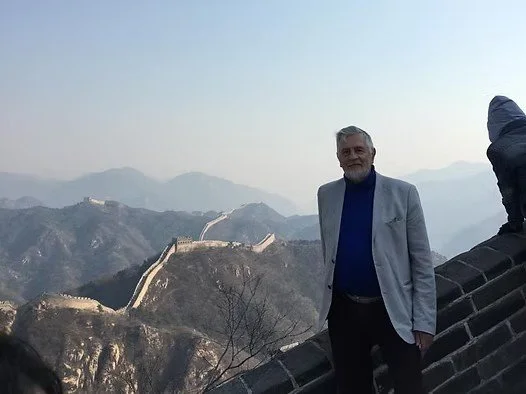
The chinese people have a deep tradition of welcoming and honoring teacher
Chinese spiritual tradition according to Ibn Arabi
In the inspired book Fuçuç al Hikam, Ibn Arabi describes all the possible orientations of the heart, producing the matrices of the wisdoms of humanity. In this book, two chapters, and therefore two prophetic wisdoms, can be linked to the Chinese Tradition (these wisdoms are all included in the Mohammadian revelation, which integrated into a final unity of doctrine and spiritual influence).
The first of them is the wisdom of Shith (or "Seth", the son of Adam), relating to the mystery of the qada' (the predestination) and the qadar (the actualization) as well as the mystery of the movement of the generating of the beings (which is the "breath of the All-Merciful", an-nafas ar-Rahman). In this chapter are evoked the metaphysical principal of the progression of the manifestation through successives phases, the science of predestination and destiny and the secret of gifts from God to beings and its different degrees.
Indeed, the core of Chinese wisdom lies in the "Science of Changes", revealed to the ancestor Fuxi and his wife Nuwa. This science, which gave birth to Yi-Jing, describes the progress of manifestation according to the divine method, based on the succession of Yin (feminine) and Yang (masculine) - which can be assimilated to the undulatory movement of nafas ar-Rahman that Ibn Arabi describes - through the three worlds, creating the 8 hexagrams of Ba Gua. Theses 8 hexagrams structure the unfolding of destinies according to a disposition in "higher heavens" - which correspond to the primordial predispositions, the qada'- and "later heavens" - which correspond to the earthly manifestation, the qadar.
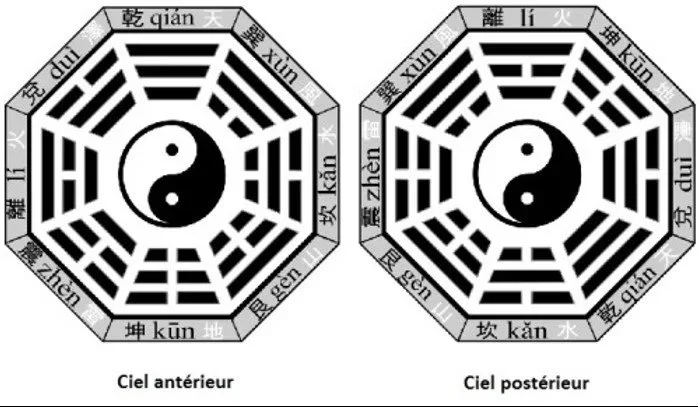
The anterior sky and the posterior sky, corresponding respectively to predisposition and actualization, where the 8 hexagrams of BaGua are arranged in a different way

In the calligraphy itself of the name Shîth we find the wave form as well as the 8 points corresponding to the 8 hexagrams of BaGua
It is important to note that this is through generational transmission that the Chinese people transmit wisdom, even before any formal religious or spiritual education, in the same way that Shîth received, after the death of Abel and the curse of Cain, the wisdom of our father Adam. It should be noted that one of the names of God - of the Principle - among the Chinese, is "the Great Ancestor", which is to be linked with the science of insufflation (nafath) by God of the human form (which is not only a physical form but most and foremost a spiritual form) in Adam, who then transmitted it to Shîth.
We then understand to what extent the wisdom of the Chinese people cannot so easily be affected by the destruction of external forms and institutions, and this is why Ibn Arabi tells us, in his chapter on Shîth, that the "Seal of the Begotten", the last man to maintain the human form which was breathed into Adam, will be from China.
It is also a part of the wisdom of Loqman, representing in the Qoran filial piety, transmitting wisdom to his son. This Science of Loqmân is described by Ibn Arabi as representing the archetypal "wisdom", which is not the result of a divine descent but which is transmitted from generation to generation in order to maintain the form of a revealed wisdom, through the accomplishment of righteousness.
We therefore understand the complementarity of the Verbs of Shîth and Loqmân, which relate respectively to the foundation of wisdom and its preservation.
Furthermore, tthe question of the Principial Will (Machi'at) and the Actual Will (Iradat) is fundamental in the Chapter of Lôqman, which once again echoes the Primitive Heavens and the Later Heavens of the Chinese Tradition.
The unfolding of destiny, which is existantiation itself, is entirely a movement of the Science of Allah. By the experimentation (ikhtibar) of Life, man seems to make this science "advance" (as is taught by Loqmân), but at the same time this science is in reality known from all eternity to those who place themselves at the origin of changes and become one with their source (this is the science of Shîth).
The wisdoms of Shîth and Loqmân are related in that both relate to the Divine Will and its gradation. Loqmân, described by Ibn Arabî as the archetype of the wise, is to Shîth what the Confucian way (in its deepest sense) - which begins with morality and ends with wisdom - is to the Taoist way - which begins with wisdom, and ends with Dao (the immobile engine of the Universe).

The caduceus, hermetic symbol, representing the two snakes symbolizing the ascending and descending march of manifestation along the axis of the World. This symbolism was used by the “Sethian” Gnostics, who saw in the prophet Seth their spiritual guide and the manifestation of the Divine Word
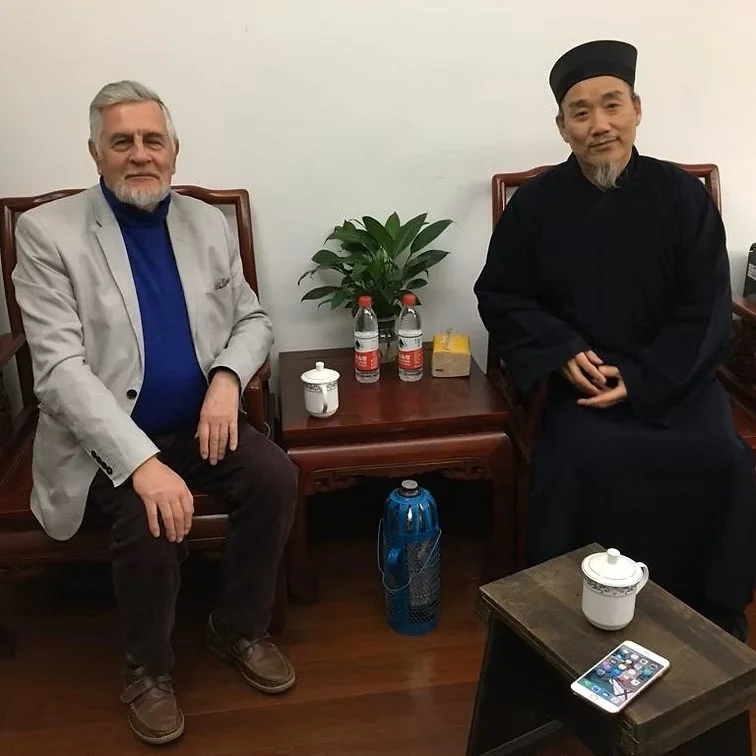
Master Meng, high priest of BaiYun Temple (White Cloud Temple) in Beijing
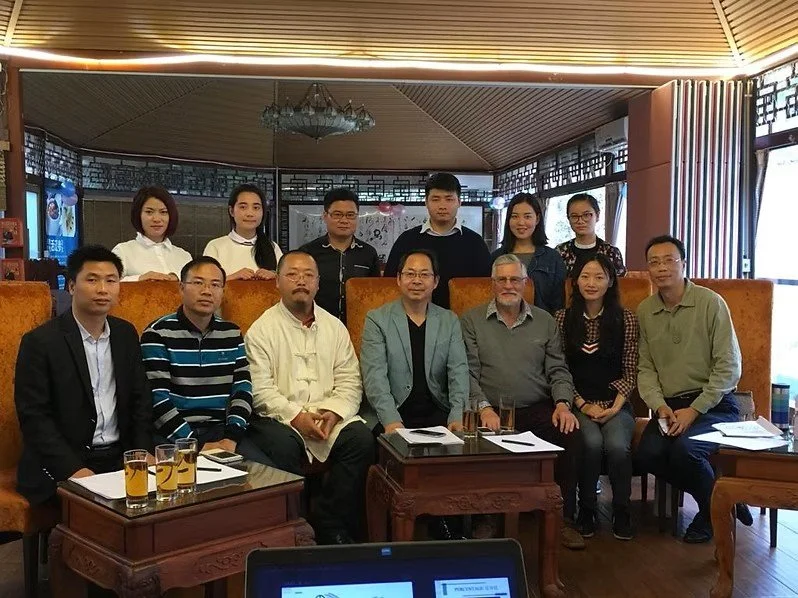
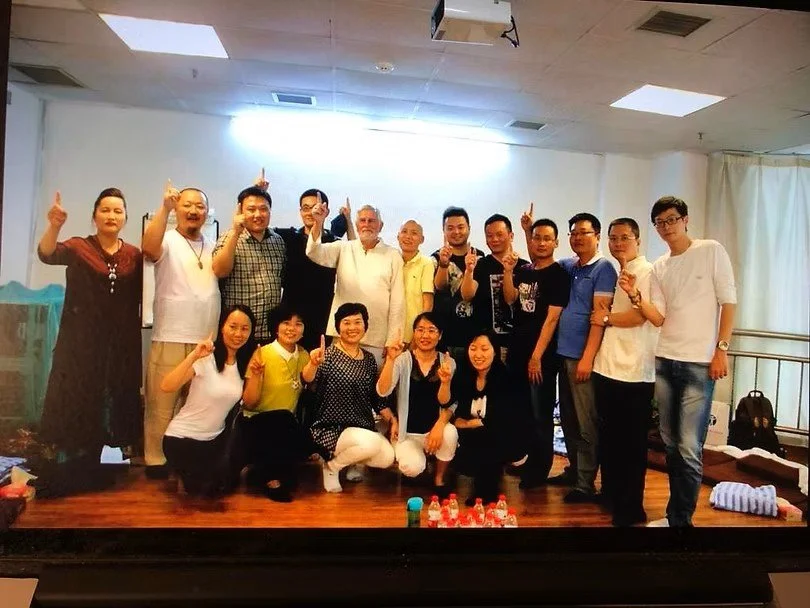
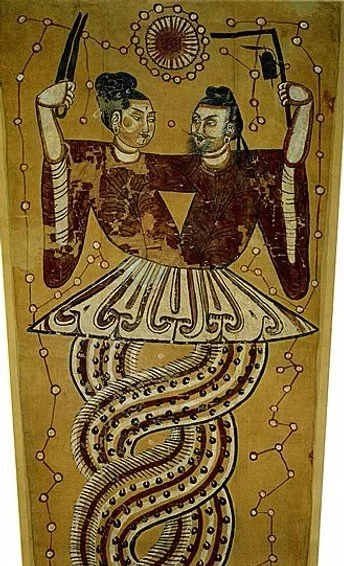
The legendary couple Fuxi and Nuwa, symbolized in the form of entwined snakes, representing the alternation of Yin and Yang in manifestation
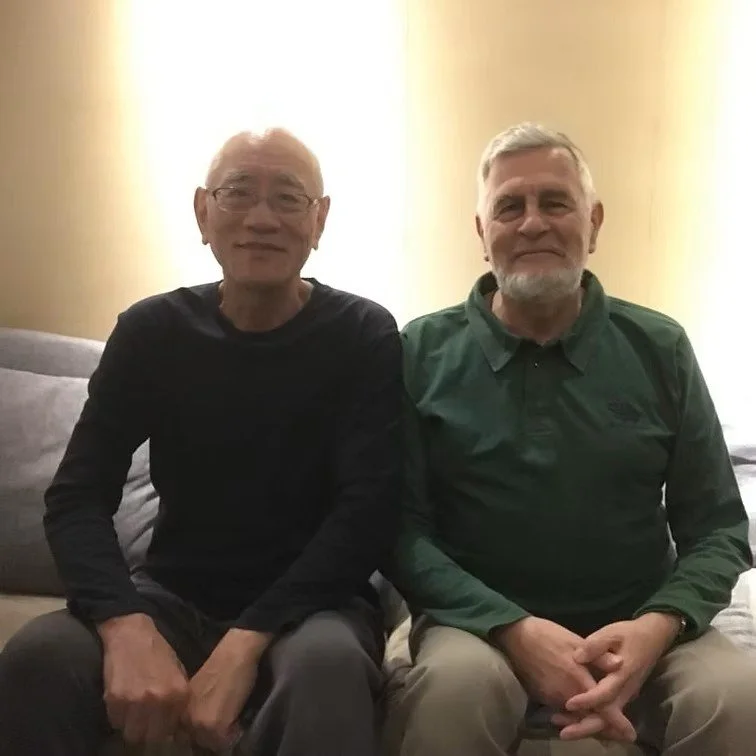
Master Li, faithful to the tradition of hidden wisdom, inherits the transmission of his grandfather, founder of the Taoist Tiandi movemen
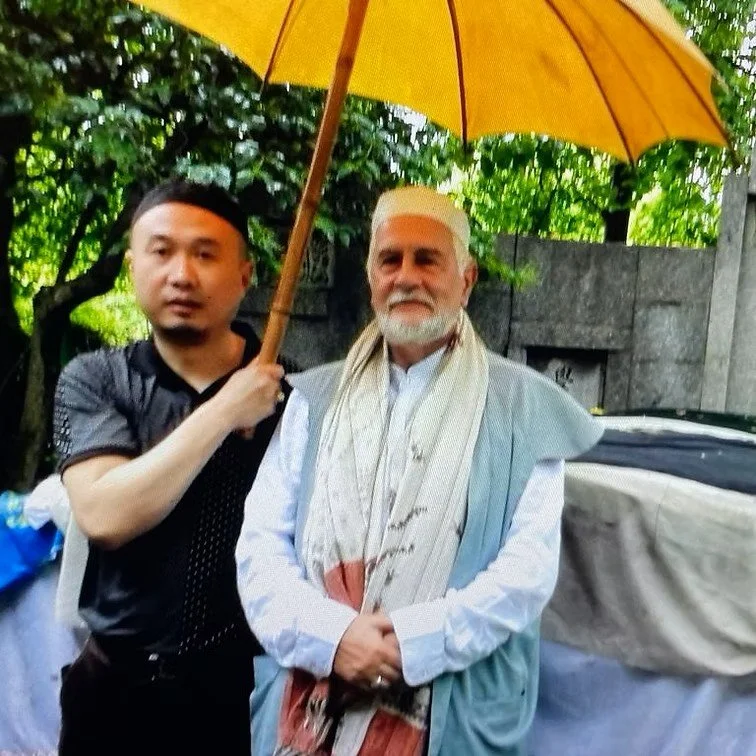
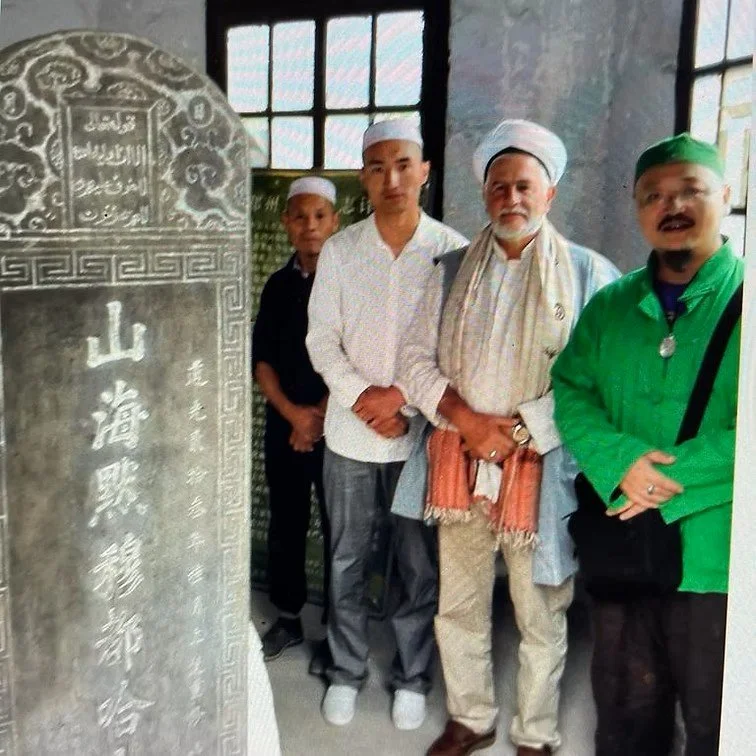
Visit to the Nanjing mosque, where Sheikh Amanoullah and the chinese Imam communicated in Arabi
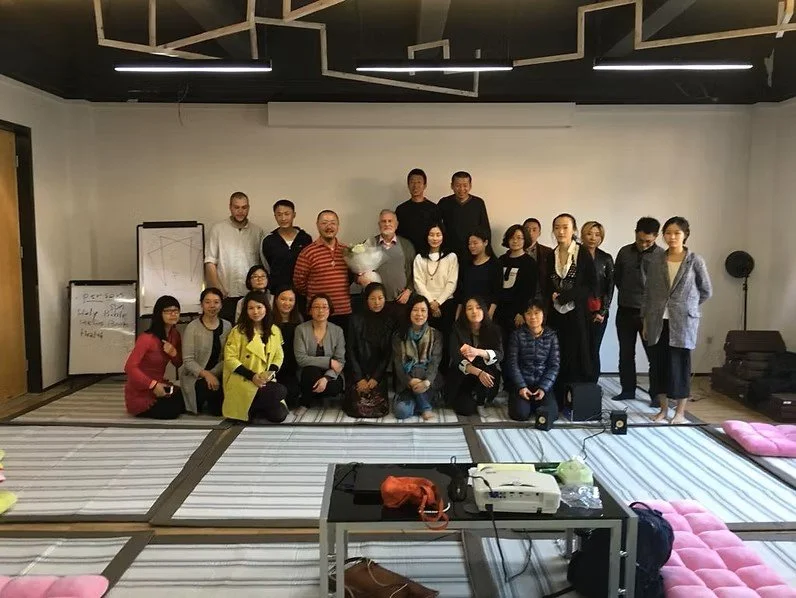
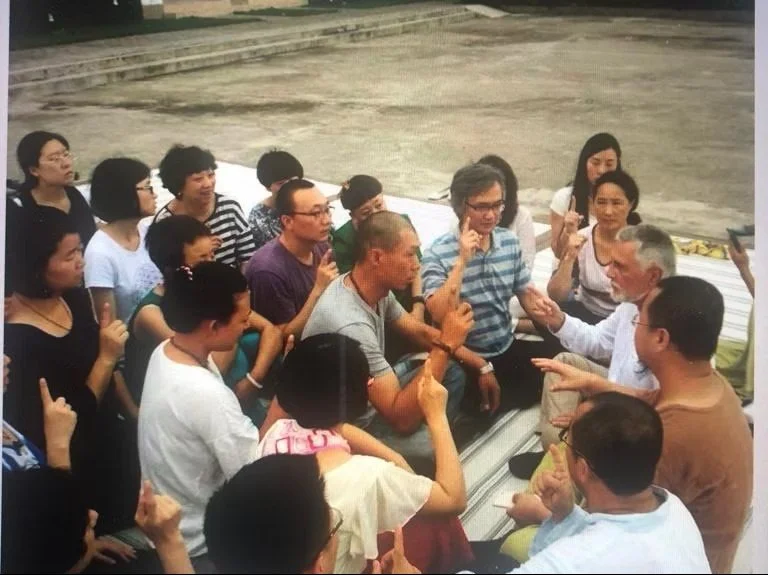
It is an immense thirst and a real enthusiasm that Shekh Amanoullah encountered among his students in China, through Sheikh Amanoullah, hundreds of Chinese students discovered the teachings of Sufism