
Naqshbandi principles and practices
BismiLlahi-r-Rahmâni-r-Rahîm
Les 11 Naqshabandi principles
The naqshbandîs practice among other things the "silent meditation of the heart", they are known as the "silent Sufis" and practice dhikr (remembrance of God) and sohbat (companionship, intimate relationship between the disciple and the master).
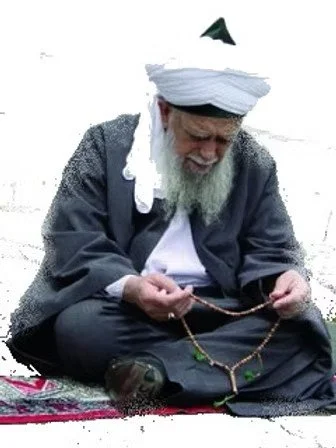
The Naqshbandi way is based on 11 principles.
The 8 first were formulated by 'Abd al-Khâliq al-Ghujdawânî and the last 3 were added by Bahâ'uddîn Shâh Naqshband
1. Remembrance or "making mention of" orally and mentally: consists in the constant repetition of the dhikr (invocations) that has been attributed to us, in order to attain the vision of bliss. Shâh Naqshband used to say: "The purpose of dhikr is that the heart should always have al-Haqq [God is Truth] in consciousness, for its practice banishes inattention.
• Remembrance : focus on the divine presence in a state of dhawq (sensitivity), foreknowledge, intuitive anticipation or perception, without outside help.
2. Constraint or restraint: when the dhâkir (the one who practices dhikr) is repeating the shahâda, he should interpose phrases such as "My God, you are my goal and your satisfaction is my goal", in order to prevent his thoughts from going astray. This also has the meaning of returning to God, of repentance.
3. Vigilance: to be vigilant against thoughts that could lead us astray, when we repeat the sacred phrase (the shahâda).
4. Remembrance: focus on the divine presence in a state of dhawq (sensitivity), foreknowledge, intuitive anticipation or perception, without outside help.
5. Solitude among the crowd: the pilgrim's journey, although seemingly in the world, is an inner journey with God. It is also advisable to practice dhikr every week in an assembly.
6. Consciousness of breathing: This is the technique of breath control. One should not inhale or exhale carelessly, without thinking about it.
7. Journey to the homeland: It is an inner journey, a movement from blameworthy qualities to praiseworthy qualities. Some consider it as the revelation of the hidden side of the shahâda.
8. Be aware of the place where you are walking: The sâlik (pilgrim) must always be careful, during his journey and whatever the country he crosses, that his eyes are not distracted from the goal of his journey.
9. Consciousness of time (Wuqûf zamânî): is to be conscious of how we spend our time: whether we are staying on the right track or going astray. In the latter case, one must repent. The mureed must analyze and evaluate his actions at all times.
10. Consciousness of numbers (Wuqûf ‘adadî): to count the number of dhikr that one performs, so as to prevent bad thoughts from invading us and to perform the repetition prescribed by the master as quickly as possible.
11. Consciousness of the heart (Wuqûf qalbî): It consists of directing one's heart to the divine presence only, feeling and visualizing every thought and inspiration, good and bad, alternating between light and darkness inside the heart. The dhikr is indeed prescribed in order to control and avoid the turbulences of the heart.
_____________________________________
The Wird - individual daily practice :
This initiation links you with the 40 masters of the initiatory chain of the naqshbandis sages coming from the 12 Imams of the Ummah, this seed that has been subtly placed in your heart must now be nurtured like a flower with the Wird (Wird is from the same root as Warda, the flower), this Wird will allow your body of light to grow, as a "celestial water" makes the flower grow, so that you too can taste the Bliss according to the Qur'anic verse: Qad aflaha man zakkaha, "Has attained Bliss/Beatitude whoever has purified it (his soul)". The Wird is recited daily, especially at the time of fajr if not later in the day.

Wird :
3 × Shahada : “Achhadou an lâ ilâha illa-llâh, wa ashadou ana muhammad abduhu wa rasûlu”
70 דAstaghfirullah”
1 × Fâtihah (Sourate 1)
7 × As Sharh (Sourate 94)
11 × Al Ikhlâs (Sourate 112)
1 ×Al Falaq (Sourate 113)
1 × An Nass"(Sourate 114)
10 ×"La ilaha illa Allah"
After the tenth: "Muhammad Rasouloullah"
10 × Salat ‘ala an Nabi : "Allahoumma salli 'ala Mohammed wa 'ala Âli Mohammed wa Sallim "
Dedication of the dhikr by the formula:
“Ila hadrati-n-nabi wa ahli-l-bayti-t-tahireen wa ila mashaykhina fi tariqati-n-naqshbandiyyati-l-aliyya, khassatan Shah Bahahuddin Naqshband wa Sultanu-l-Awliya Shaykh Abdallah al Faiz ad-Daghestani wa Shaykhuna wa Murshiduna Shaykh Nazim al Haqqani wa Imam Ali, wa sa'iri sadatina wa siddiqqiyyun,
Bi Haqq Mohammed wa Ali wa Fatima wa Hassan wa Hussein”
Al Fatiha
3 x “Allahu Allahu Allahu Haqq”
100 x"ya Halim ya Hafiz"
100 × Salat ‘ala an Nabi : “Allahoumma salli 'ala Mohammed wa 'ala Âli Mohammed wa Sallim "
"Allah" 1500 or 5000 or more
Then dedication of the dhikr another time:
“Ila hadrati-n-nabi wa ahli-l-bayti-t-tahireen wa ila mashaykhina fi tariqati-n-naqshbandiyyati-l-aliyya, khassatan Shah Bahahuddin Naqshband wa Sultanu-l-Awliya Shaykh Abdallah al Faiz ad-Daghestani wa Shaykhuna wa Murshiduna Shaykh Nazim al Haqqani wa Imam Ali, wa sa'iri sadatina wa siddiqqiyyun,
Bi Haqq Mohammed wa Ali wa Fatima wa Hassan wa Hussein”
Al Fatiha
_____________________________________
Le Khatm Khawajagan - rite hebdomadaire collectif :
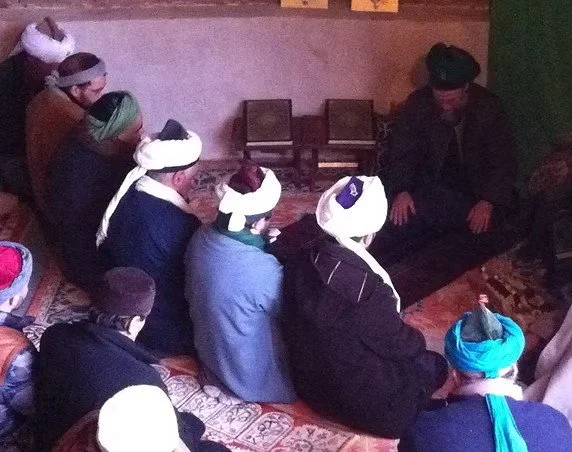
The Khatm Khawajagan is usually practiced on Thursday evening, so in the night of Friday, in the presence of a Shaykh or his deputy (Moqaddem). It is a collective practice whose form evolved trhough epochs, but whose arcans stayex the same. The Khatm was originally silent, it however be practiced aloud nowadays, with a quiet part when meditating in the subtle centers. The main body of the practice is the following:
3 x Shahada
25 x“Astaghfirullah”
The Shaykh recites the following du’a: "Allahuma Ya Musabbib al-Asbab, Ya Mufattih al-Abwaab, Ya Muqallib al-quloobi wal-absaar, Ya Daleel al-mutahayyireen, Ya Ghiyath al-mustaghatheen, Ya Hayyu, Ya Qayyum, Ya Dhul-Jalali wa-l-Ikram! Wa ufawwidu amri il-Allah, inn-Allaha baseerun bil-'ibad”
Rabitat ash-sharif : connect your heart to the heart of Shaykh Nazim who realized the link with the heart of Prophet Muhammad (saws), until the Divine Presence
7 x Fatiha
10 × Salat ‘ala an Nabi : "Allahoumma salli 'ala Mohammed wa 'ala Âli Mohammed wa Sallim "
7 × As Sharh (Sourate 94)
11 × Al Ikhlâs (Sourate 112)
7 x Fatiha
10 × Salat ‘ala an Nabi : "Allahoumma salli 'ala Mohammed wa 'ala Âli Mohammed wa Sallim "
A designated person read the Qor’an : "Rabbi qad ataïtani mina al 'ilm wa 'allamtanî min ta'wil al ahâdith fâtiri samâwâti wa al-ardhi, anta waliyyi fi ad-duniya wa al-akhira, tawaffâni musliman wa alhiqnî bi as-sâlihîn - Amîn, amîn, sadaqa allahou - l 'adhîm"
Ihda : Prayer on the prophet and on the masters of the Golden Chain
100 x“La ilaha illa Allah”
“Ila hadrat sayyidina wa nabiyyina Muhammad, Rasoulul-Allah, Sallah Lahu ta'ala alayhi wa ala alihi wa sallam”
3 x“La ilaha ill-Allah Muhammadun Rasoulul-Allah, Aleyhi Salatul Allah”
3 x“La ilaha ill-Allah - Muhammadun Habibul-Allah, Aleyhi Salatul Allah”
3 x “La ilaha ill-Allah - Muhammadun Khalilu-Allah, Aleyhi Salatul Allah”
3 x “La ilaha ill-Allah - Muhammadun Safiyyu-Allah, Aleyhi Salatul Allah”
3 x “La ilaha ill-Allah - Muhammadun Nabiyyu-Allah, Aleyhi Salatul Allah”
3 x “La ilaha ill-Allah - Muhammadun Shafi'u-Allah, Aleyhi Salatul Allah”
Ihda for our Shaykh, the Prophet and all saints + Fatiha
33 x “Hu, Hu”
“Hasbunallahu wa ni'ma-l-Wakeel, ni'ma-l-Mawla wa ni'ma-n-Nassir, la hawla wa la quwwata illa billahi-l-'Aliyyi-l-'Adheem”
33 x “Haqq, Haqq”
“Hasbunallahu wa ni'ma-l-Wakeel, ni'ma-l-Mawla wa ni'ma-n-Nassir, la hawla wa la quwwata illa billahi-l-'Aliyyi-l-'Adheem”
33 x “Hayy, Hayy”
“Hasbunallahu wa ni'ma-l-Wakeel, ni'ma-l-Mawla wa ni'ma-n-Nassir, la hawla wa la quwwata illa billahi-l-'Aliyyi-l-'Adheem”
3 x “Allahu Allah Haqq”
3 x “Allahu Allah Hayy”
10 x “Allah Hayyu Ya Qayyum”
“Hasbunallahu wa ni'ma-l-Wakeel, ni'ma-l-Mawla wa ni'ma-n-Nassir, la hawla wa la quwwata illa billahi-l-'Aliyyi-l-'Adheem”
3 x “Ya Hu, Ya Hu, Ya Da'im”
“Allah Ya Hu, Ya Da'im”
2 x “Ya Da'im, Ya Da'im, Ya Da'im Ya Allah”
2 x “Ya Haleem, Ya Haleem, Ya Haleem, Ya Allah”
2 x “Ya Hafeedh , Ya Hafeedh, Ya Hafeedh , Ya Allah”
2 x “Ya Lateef, Ya Lateef, Ya Lateef, Ya Allah”
2 x “Ya Ghaffar, Ya Ghaffar, Ya Ghaffar, Ya Allah”
2 x “Ya Sattar, Ya Sattar, Ya Sattar, Ya Allah”
2 x “Ya Fattah, Ya Fattah, Ya Fattah, Ya Allah”
2 x “Ya Mujeeb, Ya Mujeeb, Ya Mujeeb, Ya Allah”
2 x “Ya Mu'izz, Ya Mu'izz, Ya Mu'izz, Ya Allah”
2 x “Ya Mu'een, Ya Mu'een, Ya Mu'een, Ya Allah”
2 x “Ya Wadud, Ya Wadud, Ya Wadud, Ya Allah”
2 x “Ya Rahman, Ya Rahmân, Ya Rahmân, Ya Allah”
2 x “Ya Raheem, Ya Rahîm, Ya Rahîm, Ya Allah”
2 x “Ya Hannan, Ya Hannân, Ya Hannân, Ya Allah”
2 x “Ya Mannan, Ya Mannân, Ya Mannân, Ya Allah”
2 x “Ya Dayyan, Ya Dayyân, Ya Dayyân, Ya Allah”
2 x “Ya Subhan, Ya Subhân, Ya Subhân, Ya Allah”
2 x “Ya Sultan, Ya Sultân, Ya Sultân, Ya Allah”
2 x “Ya Aman, Ya Amân, Ya Amân, Ya Allah”
4 x “Ya Allah, Ya Allah, Ya Allah, Ya Allah” + 7 times
“Hasbunallah wa ni'ma-l-Wakeel, ni'ma-l-Mawla wa ni'ma-n-Nassir, la hawla wa la quwwata illa billahi-l-'Aliyyi-l-'Adhîm”
25 x “Bismillah ir-rahman ir-rahim”
“Hasbunallah wa ni'ma-l-Wakeel, nicma-l-Mawla wa ni'ma-n-Nassîr, la hawla wa la quwwata illa billahi-l-'Aliyyi-l-Adheem”
“Inna Allaha wa mala'ekatuhu yusalloona ala Nabi, Ya ayyuha alladhina amanu, sallu 'alayhi, sallu 'alayhi wa sallimu taslima”
10 x Salawat
Ihda : prayer to close the Khatm - Prayer on the Prophet (saws), du’a for all Naqshbandi masters and all saints accross the world