
Article 8 : Repentance or the return to God
BismiLlahi-r-Rahmâni-r-Rahîm
The Royal Way to return to YOURSELF, to return to the Lord, to the Rabb who dwells in our hearts, is what all monotheistic traditions, in perfect agreement, call : REPENTANCE.
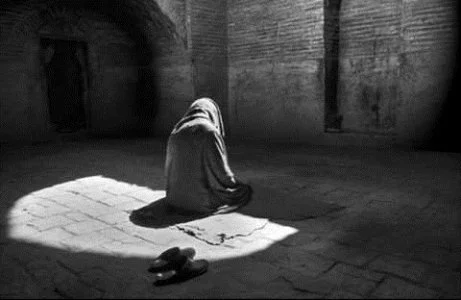
The Royal Way to return to YOURSELF, to return to the Lord, to the Rabb who dwells in our hearts, is what all monotheistic traditions, in perfect agreement, call : REPENTANCE.
by S. Amanoullah de Vos
The Repentance or the Return to God
In Arabic as in Hebrew, TAWBA, repentance, is the return of the soul to God, yatûbu, and this return also calls for the return of God to the soul through a new covenant, a new "deposit of trust", the TABÛT (a word of the same root as tawba, repentance, return to God). This return to our reality, to our true essence is not a simple game of the mind, a simple concern, a new moralization, a simple prayer or a simple asceticism, it is a path which implies the turning around of our whole being in an extreme call, in a profoundly painful awareness, a questioning under the light of the divine grace, whose sanctity brings out precisely to what extent we are lost, profoundly sinners. It is necessary to face up to our human weakness, necessary to face up to our permanent sinfulness because we are not in the state of sanctity, necessary to see our inner hell up closely. This is part of the spiritual journey carried out by all the prophets and divine envoys. If you simply ask for forgiveness in the sense of veiling your fault, this is not the action of repentance we are talking about. Repentance is a light of conscience that brings the fault to light, right in front of us. It is revealed in all its horror. It is not enough to resist the fault, even if, of course, the spiritual fight against our passions is the beginning of the practice, it is necessary to go even further.
It is a matter of calling upon the divine light, "Allahu Nûr", so that we may be led to the contemplation of why we were created "in the best of forms", and then to see in contrast with this sublime divine design for us, how we have wasted our heritage and have sunk so low. "Laqad khalaqna l insan fi ahssani taqwim thuma radadnahu assfala ssâfilîn", "Yes, we created man in the most perfect form; then we sent him down to the lowest of degrees" (Qur'an 95, 4-5).
Repentance is the backdrop of the whole path towards God, to see one's sin is in fact to see one's distance from the Divine Presence, a distance that the latter precisely illuminates because God is Light, Allahu Nûr. Here is indeed the greatest possible pain, that of the soul that lives the hell of separation from the BELOVED or even the distance, however small, is unbearable.
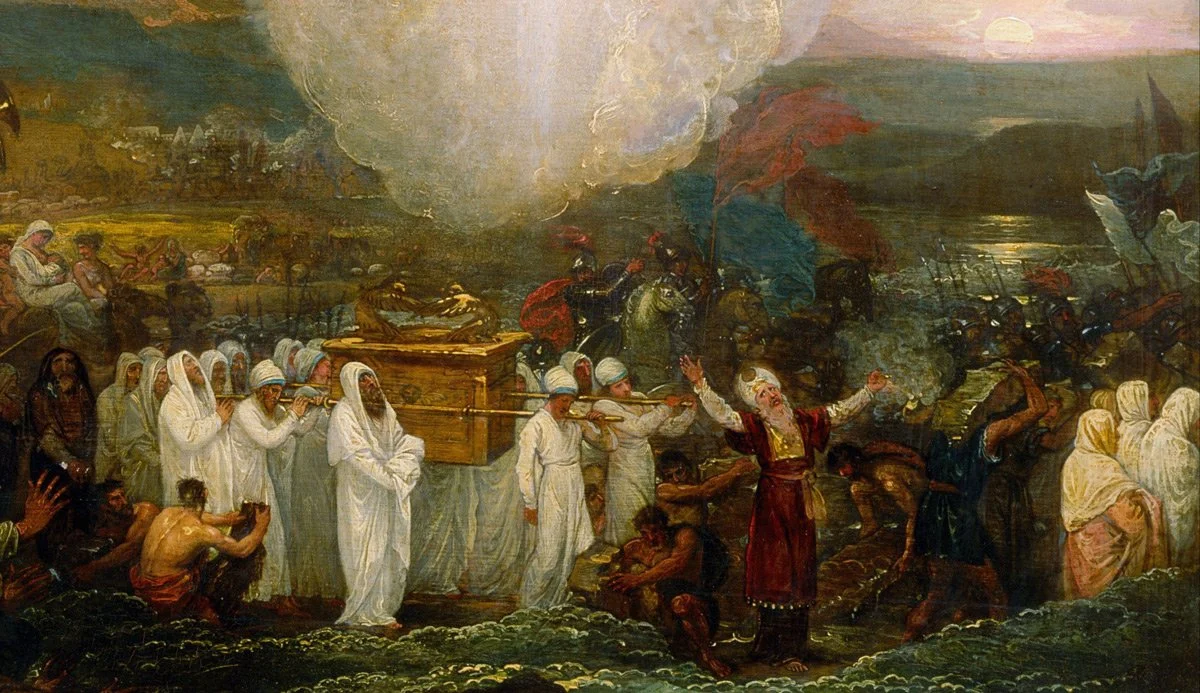
Tabût, the Ark of the Divine Covenant, symbol of the Light of guidance Allahu Nûr, is from the same root as Tawba, Repentance or Return
The more you progress, the more important humility becomes
It is only by assuming to look at this, it is by accepting to live this hell, in the experience of repentance in this fire which purifies that one frees oneself precisely from the hell definitively, that of the distance, of the separation. It is a matter of accepting the trial of fire like the salamander that settles there to achieve the alchemy of a profound transformation. It is a torrent of tears that becomes the water of our ablution. True repentance, far from a simple questioning or small tortures of the spirit making us feel guilty, is rather an extraordinary grace, very particular emanating from the Holy Presence : " QUDDUS ". It is indeed essential to put oneself in the Presence of the divine Sanctity : AL QUDDUS, to measure how far we are from this sanctity.
Our late master Sheikh Nazim liked to say that if we look at a star from afar, we see it as very small and we see ourselves as proportionally very big, but the closer we get to it, the more we discover that it is we who are small and it is very big. So it is with sainthood. The more one progresses, the more important humility becomes, the more permanent repentance settles in. The greater the Divine Grace - for it is CONSCIOUSNESS - the more painful, the deeper the repentance and this as long as we are in this world. Rabia Adawiya, the great Sufi saint answered a man who believed that his asceticism for 20 years had sanctified him: "Wretched man do you not see that your whole existence is a sin". The greater the Presence of Sanctity, the smaller the servant sees himself before this greatness. As long as we are in this existence, the path is not finished and remains slippery. One could say to insist on the permanence of repentance in all our lives that it will only cease when we are perfectly conformed to Sayyidina Mohammad -'alayhi çalat wa Salam - and who would dare to claim that in this slippery world.
But then if we understand what has just been said, the obvious question arises: How to achieve this true repentance so powerful that it can be death and resurrection. This is called al-Fana in Islamic terms: the extinction of the EGO in the soul and al-Baqa, "the maintenance of the soul transformed into God". For it is only when this repentance is complete that joy becomes perfect. We then enter into love and compassion for all beings deprived of this grace. Consciousness becomes BEING and the radiance of Being is JOY, which is shared as it radiates to all creatures.

The Salamander that settles in the trial of the Fire of transmutation with Peace
The deeper the repentance and its pain the higher and greater will be the joy of the return
The conditions for realizing this true repentance are therefore very important because it is not easy to descend into the dark depths of the ego. The disciple tends to look at the sky, to want spiritual experiences that often still fall prey to the ego. We need a big brother to help us look at our feet with humility, to take example from the earth (humus) on which we walk and which nevertheless nourishes us by giving its fruits as the Koran reminds us. We must face our soul with courage in its wounds whose "scabs" prevent us from breathing. It is not easy to accept it, it is a great suffering of the conscience as we have indicated, it leaves us speechless, without desire to communicate, just in contrition, in a silence of death. We need to be guided, supported in our solitude to live this process of descent and ascent. Because it is easy to go back up when we dive, the soul naturally prefers the sweetness of heaven, but let us repeat it again so as not to forget: the deeper the repentance and its pain, the higher and greater the joy of the return. That is why, in the spirit of helping those who want to sincerely commit themselves to the path, whatever their religion, we have been asked to create a place for this work in companionship with men of good will. Not everyone can choose to withdraw from the world in a mountain, in the desert or in a monastery in order to live fully this "very painful repentance" which, moreover, requires to be supervised, supported, managed, guided and integrated.
There is no exclusion for repentance
We therefore choose near the mountains of France a place which, after a preliminary work on fasting and on the knowledge of the soul, can allow us to retire in silence in small huts allowing an isolation of one week to several months and according to a program of retreat decided together and accepted. We have indeed received the blessing of our master to guide these retreats according to a very ancient science which remains always current and even adaptable to the conditions and problems of our time, including conditions of fasting, nutrition and even medical follow-up.
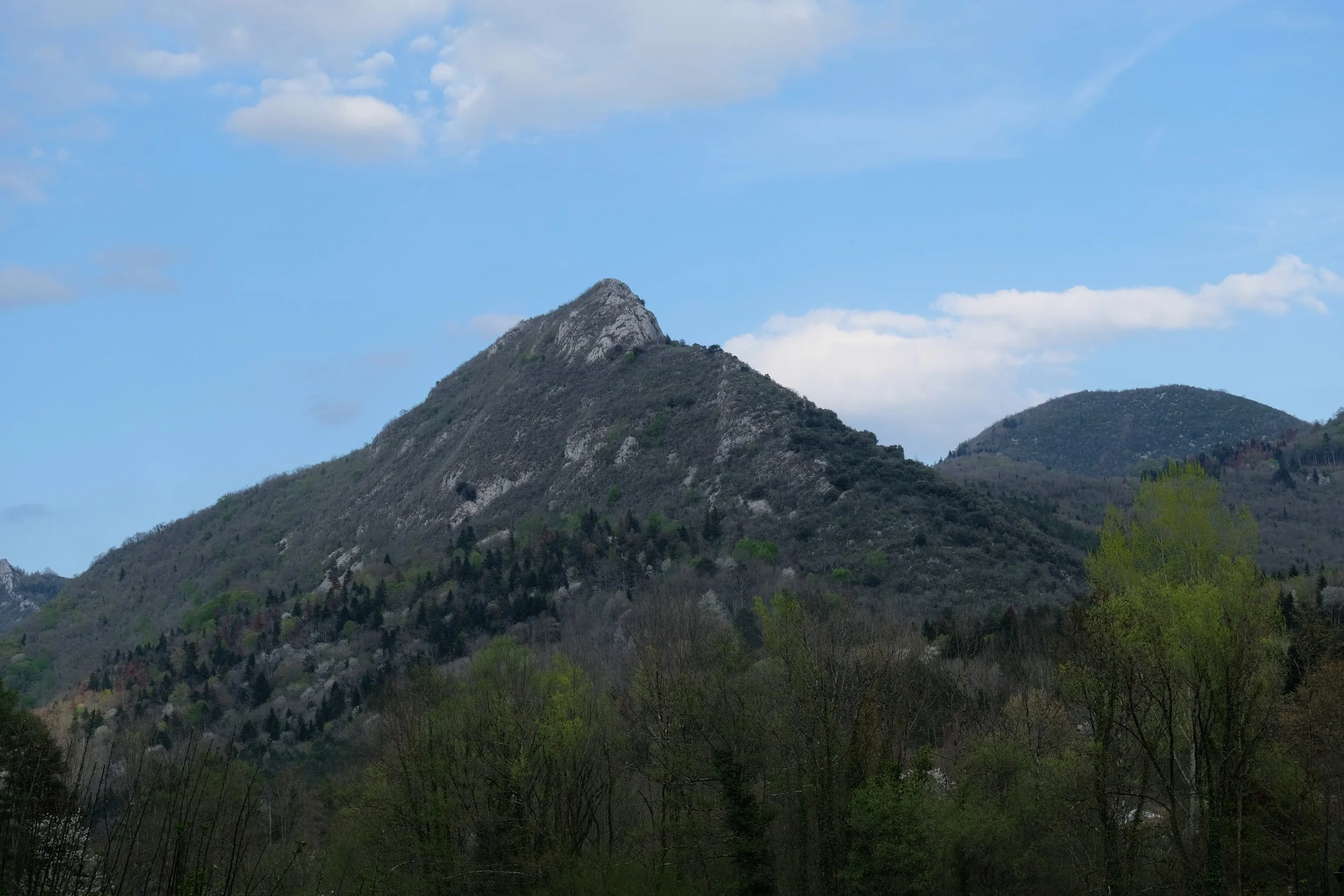

The Ariege, approved by Sheikh Nazim, with its mountains and rivers is a favorable place for Khalwa. With a picture of one of our retreat huts.
The specific permission to guide in the Khalwa is obviously essential, as it allows one to receive the gift of divine grace which is Ruh al Hadi, Spirit of Guidance, the indispensable support of this experience. There is of course a preliminary preparation, a maturation, a selection to discern who is ready for this retreat even if repentance is always necessary and permanent. Thus each day and especially each of our nights can be small retreats where we can pray for example salat an-najât, the prayer of help with long prostrations, sujûd, which prepare us for this return to God.
As for the retreat, there is a program of guidance, but it will be adapted to each person according to his own characteristics, according to his "spiritual signature," his predisposition, his spiritual path. We are asking all sincere men and women to pray that this project will see the light of day in the spirit of opening a space for the return to God. This concerns all people regardless of their religion, even atheists, because there is no exclusion for repentance.
Wa mina Allah at Tawfiq.
Servant of the Way, S. Amanoullah